AI vs Traditional Logistics
Discover the key differences between AI-powered and traditional logistics in cost, efficiency, and overall performance.
4/18/20261 min read
Introduction
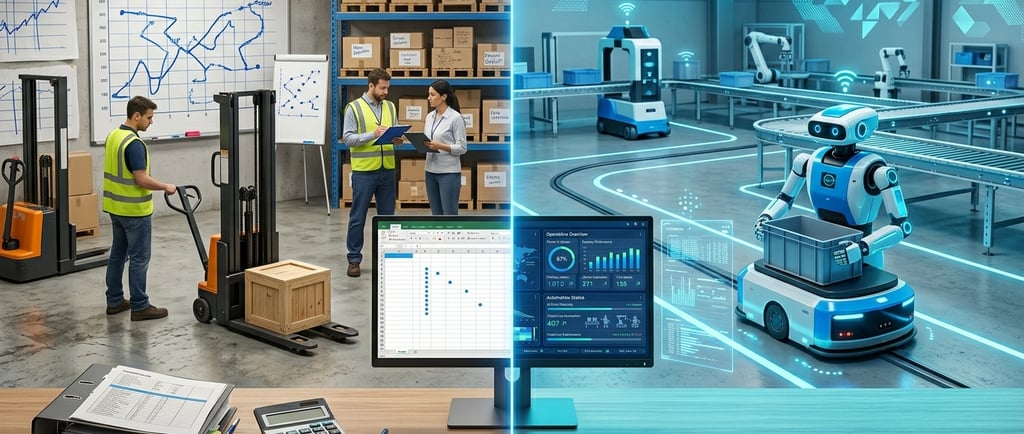
The logistics industry is evolving rapidly, and companies are facing increasing pressure to reduce costs and improve efficiency. Traditional logistics methods are no longer enough to keep up with modern supply chain demands.
Artificial intelligence is changing the game by introducing smarter, faster, and more cost-effective solutions. But how does AI compare to traditional logistics systems?
In this article, we break down the key differences between AI-powered logistics and traditional approaches in terms of cost, efficiency, and performance.
1. Cost Efficiency
Traditional logistics systems often rely on manual processes and fixed planning methods, which can lead to inefficiencies and higher operational costs.
AI, on the other hand, optimizes routes, reduces fuel consumption, and improves resource allocation through data-driven decision-making.
AI advantage:
Lower fuel costs
Reduced operational waste
Better cost control
2. Operational Efficiency
In traditional logistics, many processes are handled manually, which increases the risk of delays and human errors.
AI automates key operations such as route planning, scheduling, and tracking, resulting in faster and more reliable logistics performance.
AI advantage:
Faster execution
Fewer errors
Improved workflow automation
3. Real-Time Adaptability
Traditional systems struggle to adapt to real-time changes such as traffic, weather, or supply chain disruptions.
AI systems continuously analyze real-time data and adjust operations instantly, ensuring better responsiveness and flexibility.
AI advantage:
Instant decision-making
Real-time optimization
Reduced delays
4. Data Utilization
Traditional logistics uses limited data, often based on past experience or static reports.
AI leverages large datasets and advanced analytics to generate accurate insights and predictions.
AI advantage:
Better forecasting
Data-driven strategies
Improved planning accuracy
5. Overall Performance
While traditional logistics can still function effectively, it lacks the speed and adaptability required in today’s competitive market.
AI-powered logistics systems offer higher performance by combining automation, real-time analytics, and predictive capabilities.
Conclusion
The comparison is clear: AI-powered logistics outperforms traditional systems in cost efficiency, operational performance, and adaptability. Companies that embrace AI technologies are better positioned to stay competitive and achieve long-term growth.
Want to upgrade your logistics operations with AI?
Explore our digital tools and templates designed to improve efficiency and reduce costs.
Contact
ProfitTransAI is a digital platform focused on AI-powered logistics, transport optimization, and smart supply chain solutions. We provide insights, tools, and digital resources to improve operational efficiency and business performance
Phone
info@profittransai.com
+1-800-555-0199
© 2025. All rights reserved.