How AI Improves Transport Efficiency in Logistics
Discover how artificial intelligence enhances transport efficiency by optimizing routes, reducing costs, and improving real-time decision-making in logistics operations
4/17/20262 min read
Introduction
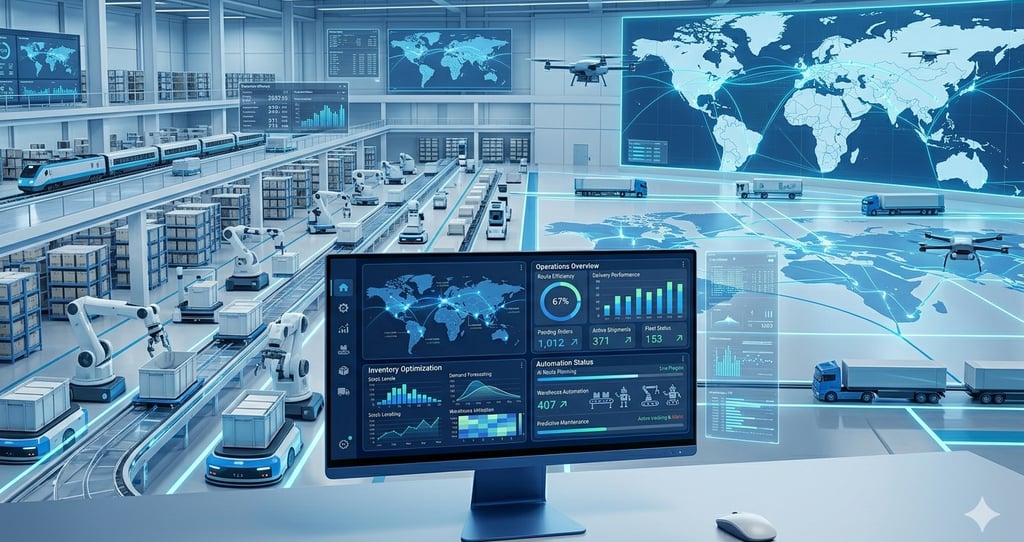
Artificial intelligence is rapidly transforming the logistics industry. As transport operations become more complex, companies are increasingly adopting AI technologies to improve efficiency, reduce operational costs, and enhance decision-making.
From route optimization to predictive analytics, AI is redefining how logistics systems operate in real time. In this article, we explore how AI improves transport efficiency and why it has become a key competitive advantage in modern supply chains.
1. Route Optimization with AI
One of the most impactful applications of AI in logistics is route optimization. AI-powered systems analyze multiple variables such as traffic conditions, weather data, delivery constraints, and fuel consumption to determine the most efficient routes.
This allows companies to significantly reduce delivery times and operational costs while improving overall transport performance.
Key benefits include:
Faster deliveries
Lower fuel consumption
Better use of transport resources
2. Predictive Analytics for Demand Planning
AI also plays a crucial role in demand forecasting. By analyzing historical data and market trends, AI systems can accurately predict future demand and help logistics companies plan their operations more effectively.
This leads to better allocation of transport capacity and reduces inefficiencies such as empty runs or underutilized vehicles.
Key benefits include:
Reduced empty trips
Improved load planning
Better coordination across the supply chain
3. Real-Time Decision Making
In today’s fast-moving logistics environment, real-time decision-making is essential. AI enables companies to monitor operations continuously and react instantly to unexpected disruptions such as delays, route changes, or supply chain issues.
This level of responsiveness improves service reliability and minimizes operational risks.
Key benefits include:
Faster response to disruptions
Reduced operational risks
Improved delivery reliability
4. Automation of Logistics Processes
AI helps automate repetitive and time-consuming tasks such as scheduling, reporting, and shipment tracking. This not only saves time but also reduces human errors and increases overall productivity.
Automation allows logistics teams to focus on more strategic tasks while improving operational accuracy.
Key benefits include:
Significant time savings
Increased productivity
More accurate operations
Conclusion
Artificial intelligence is no longer a future concept in logistics—it is a practical and powerful tool that delivers measurable efficiency gains. Companies that adopt AI technologies can significantly improve transport performance, reduce costs, and gain a strong competitive advantage.
Call to Action
Want to improve your logistics operations with AI?
Explore our digital tools and templates designed to optimize transport efficiency and decision-making.
Contact
ProfitTransAI is a digital platform focused on AI-powered logistics, transport optimization, and smart supply chain solutions. We provide insights, tools, and digital resources to improve operational efficiency and business performance
Phone
info@profittransai.com
+1-800-555-0199
© 2025. All rights reserved.